Background & Market Opportunity: Addressing Gaps in Local Discovery
The motivation behind developing Pintio was twofold: to independently acquire end-to-end mobile architecture and iOS development experience, and to solve real-world friction in location logging. Traveling in international cities (e.g., Sydney) highlighted a clear need for multi-language and multi-currency expense tracking for dining.
Analyzing existing platforms revealed distinct market gaps:
- Algorithmic Bias: Legacy Japanese platforms like Tabelog prioritize ad-paying merchants in search rankings, introducing noise for users seeking objective recommendations.
- Information Density: Maps platforms like Google Maps offer feature density, but lack lightweight tools focused specifically on dining log histories.
- Lack of Itemized Detail: While location-pinning apps exist, few services track itemized menu items alongside exact pricing. Pintio was designed to address this gap by offering a streamlined, itemized spending and location tracker.
Core Product Mechanics: AI Receipt Parsing and Multi-Currency Logic
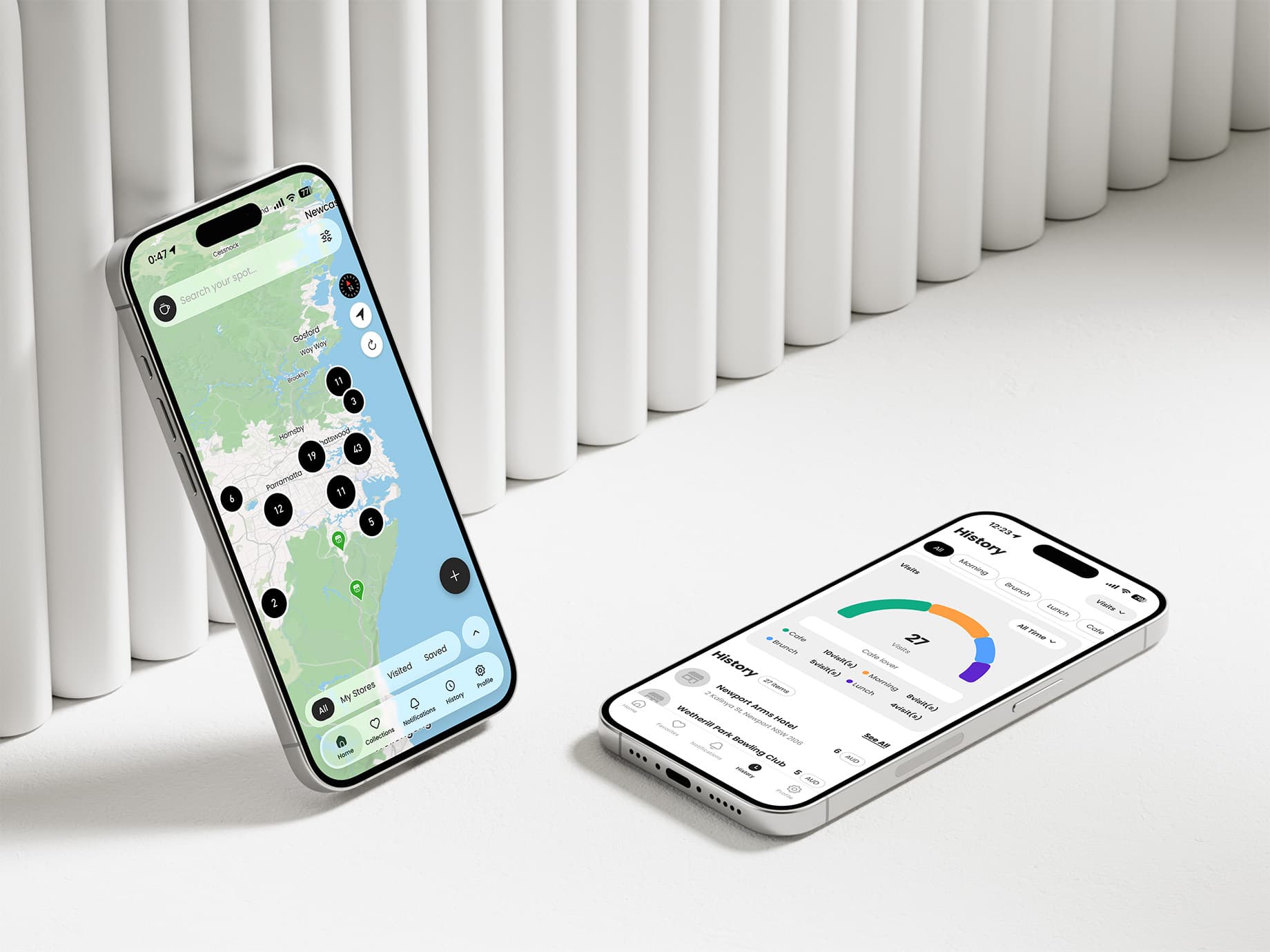
Rather than relying on manual text entry or basic map pins, Pintio centers on optical receipt parsing to capture line items, dish names, and exact expenditures—providing users with a rich visual memory of their visits.
Key production features deployed to the App Store include:
- GPT-4 Vision Receipt OCR: Automatically extracts establishment names, ordered items, individual expenditures, and dates directly from receipt photos.
- Automated Multi-Currency Conversion: Pulls exchange rates daily from an external API, processing international expenses into the user’s primary currency using current rates.
- Social Activity Feed: Displays a follow-based map feed showing friends' recent logs and saved locations.
- Behavioral Analytics: Integrated Mixpanel tracking to monitor post-launch user conversion funnels and feature engagement.
Product Strategy: Three Strategic Pivots Driven by Testing
Throughout the 12-month development cycle, I executed three major product pivots based on operational constraints and user feedback:
1. Shift from B2B-First to Consumer-First
Initially designed as a merchant dashboard platform (built in Next.js), I encountered a classic cold-start problem: merchants lacked incentive to join without an established user base. Recognizing that consumer demand must precede merchant supply, I pivoted the core focus to the consumer iOS app. The administrative backend remains synchronized on a shared database architecture, preserved for rollout once the consumer network matures.
2. Transition from Curated Listings to User-Generated Content (UGC)
The initial version restricted map pins to officially verified venues. Early TestFlight feedback showed users wanted immediate freedom to log unlisted locations. To support UGC while protecting data quality, I engineered automated database validation: user-submitted locations publish globally only after 20 unique users log a visit.
3. Expansion from Café Tracking to All Dining Categories
Pintio launched strictly as a café tracker. However, user testing confirmed that tracking dining memories and expenses was valuable across all venue types. Leveraging a flexible database schema, I expanded the scope to support restaurants, bakeries, and bars without requiring complex data migrations.
Design Engineering: Prompt-Directed React Native Architecture
Over the project lifecycle, my engineering approach evolved from writing manual code to directing AI models (Claude) via conversational architecture. I wrote raw React Native code during early stages to learn layout logic, but transitioned to AI-driven implementation for the bulk of production.
Using natural language prompts aligned directly with Figma designs, I directed the AI to establish database schemas, refactor front-end UI components, and handle API integrations. Managing execution through AI pair programming allowed me to operate as a solo Product Lead—drastically reducing development cycles and shipping a fully functional iOS app to the App Store single-handedly.
Retrospective & Growth Hypothesis
Taking total ownership of an iOS app from initial wireframes to App Store approval provided deep insights into backend sequencing, API integrations, and product friction points.
In the current post-launch phase, I am evaluating the core retention hypothesis: "Does itemized expense logging provide sufficient standalone utility to drive organic user return?" By monitoring Mixpanel retention cohorts, I am assessing whether utility alone sustains engagement or if expanding social map features (friend activity layers) will be required to drive long-term retention. Managing this end-to-end product lifecycle directly informs my approach to building collaborative, data-informed interfaces in enterprise team settings.